Role: UX Writing, Visual Design, User Research and Testing
Tools: Adobe Xd, Mural, Photoshop
Team: Ali Khan, Jasmin Tyrone, Myself
The Challenge
Give a voice to a historically underrepresented group.
Background
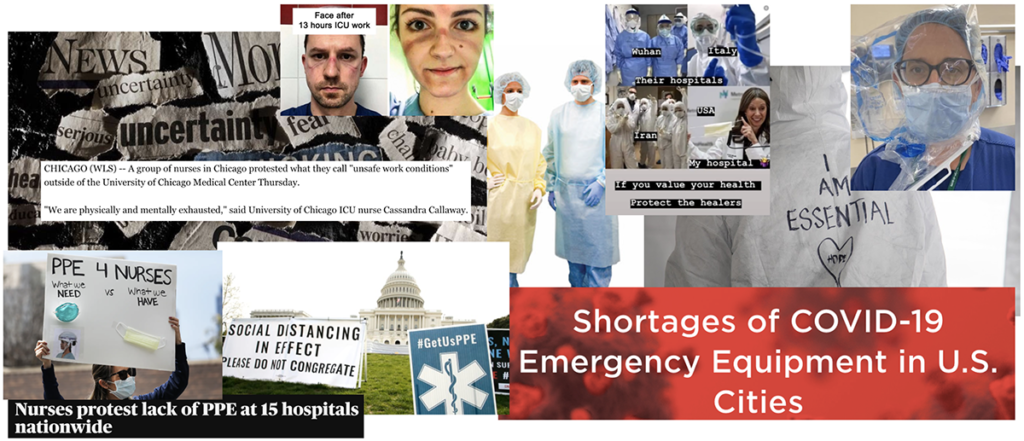
During the Spring Semester of 2020, I was assigned to a team project with the challenge of giving a voice to a historically underrepresented group. After a little brainstorming, the group decided to focus on healthcare workers. This project coincided with the beginning of the COVID-19 pandemic. News reports were flooded with images and secret videos of healthcare workers showing severe shortages of personal protection equipment (PPE) and the horrors of what they were facing daily- with hospitals not wanting the public to know the truths.
Problem Statement
Healthcare workers are concerned because they do not have help or equipment needed to perform sufficiently during the pandemic.
Research: Round One
To validate our research, we created a list of questions, then contacted every healthcare worker we personally knew from EMT to doctors and nurses to lab researchers. We asked questions about how they were holding up during the pandemic, and how their PPE levels were. Hours of interviews were recorded from the multiple people we interviewed. An overwhelming number of nurses volunteered for our interviews- and had the most to say- so we narrowed down our audience to them.
Sample of Interview Questions:
1. How are you currently handling stress?
2. How do you voice your concerns within your workplace?
3. How has the current pandemic affected your life?
4. Does your employer provide you with PPE?
A full list of the questions can be read here.
Research Findings
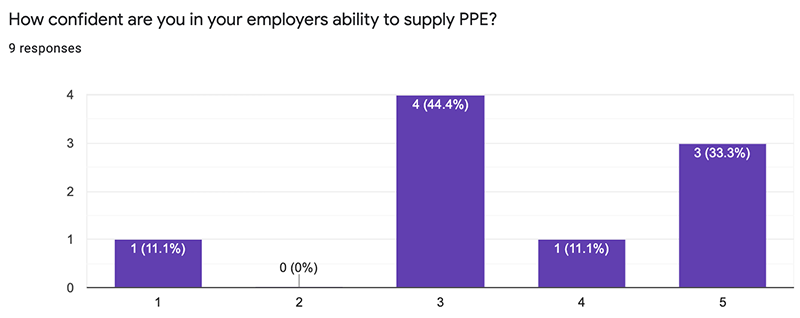
After conducting the surveys, something seemed off. The responses did not support our problem statement.
Quotes from those interviewed:
“So far my workplace has been awesome. We have all the supplies we need.” -Cardiology Physician Assistant, Christus Trinity Mother Frances
“It’s really hard right now… half of the country is suffering, aka New York, but that’s all we’re shown by the media, and I’m just sitting there, barely doing anything.” -Pediatric Nurse, Stanford Hospital
“For now, yes. Our supplies are adequate. We have N95, gloves and gowns.” -EMT, Austin Fire Department
A Need to Pivot
After much frustration pouring over the surveys, we needed to revise our problem statement. The data was not off, but was valid for another problem we discovered faced by healthcare workers.
“What the public does not understand is that we (healthcare workers) were required before this to use one mask (PPE) per patient, per visit. Now, we are told to re-use PPE around multiple patients that may or may not have the virus… We are scared… Many hospitals are understaffed on purpose and we (nurses) are having every ounce of work squeezed from us… Does management listen? No. Management knows, but never cares. They sit in their ivory towers only caring about profits… if you complain too much, you’ll get fired or given the hours you don’t want to work. Only way for them to listen is if the public hears or nurses quit.”
-Cardiac Telemetry RN, Sutter Health
Revised Problem Statement
Hospital workers are frustrated – they often feel like they are not heard, because the groups that make decisions are disconnected from those working on the ground level.
Research: Round Two
Sample of Interview Questions:
1. Do you talk to any healthcare professionals in other systems (healthcare professionals not employed by your employer)?
2. Who do you talk to about your concerns about work?
3. Do you feel your concerns are heard?
4. What ideas do you have to help other healthcare workers?
A full list of the questions can be viewed here.
Quotes from those interviewed:
“Nurses voice their opinions so many times to supervisors. Management always knows there are problems, but choose not to listen or ignore them. It always has to do with the bottom line of saving money to make their hospital look good.”
“We are a team. Our goal is to keep each other, our families
and those we serve, safe.”
Empathy Mapping, User Journey and User Persona
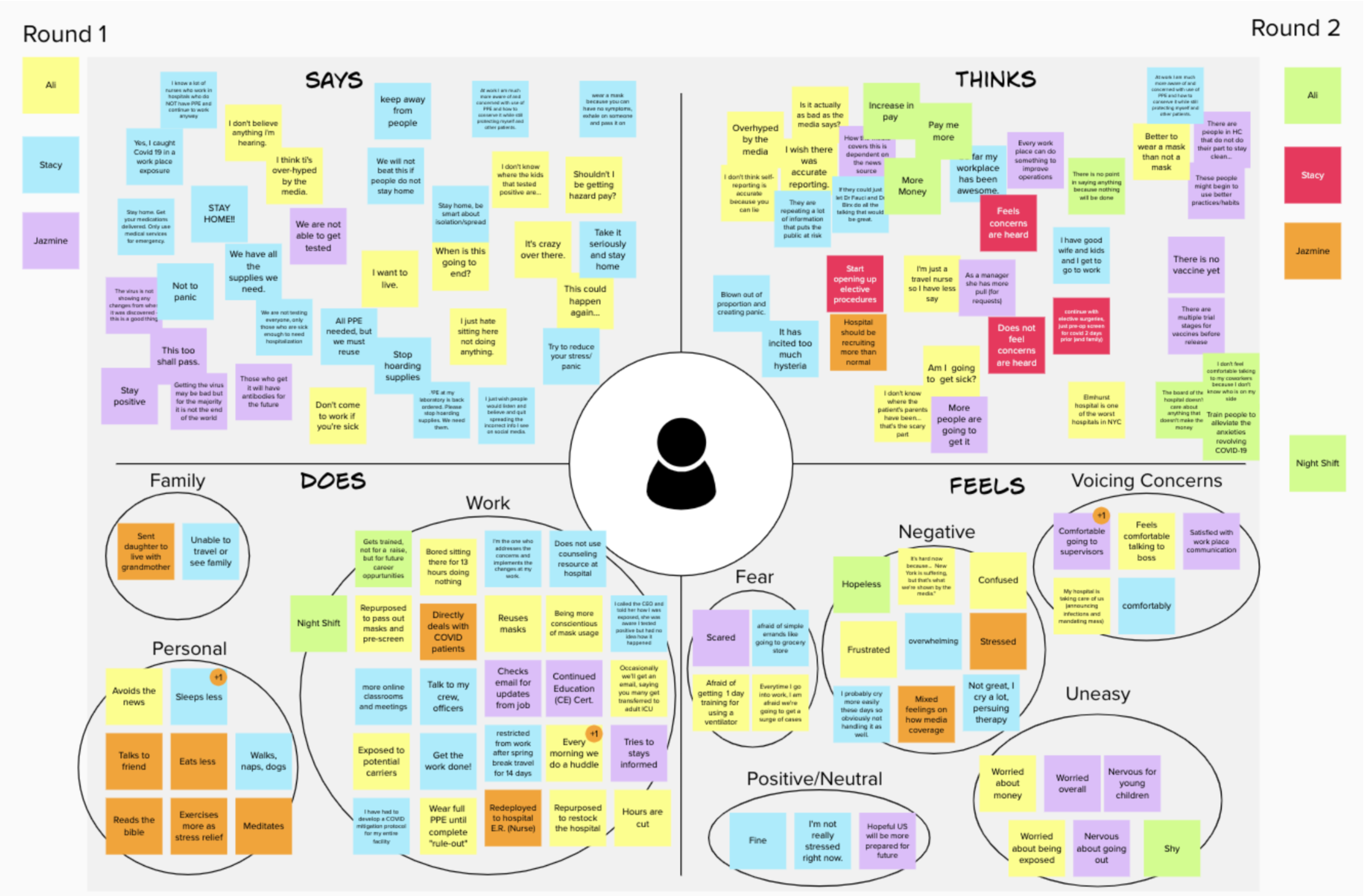
With our new problem statement and research, we organized the data we gathered into an empathy map. It allowed us to find commonalities in our data- specifically what nurses needed.
Needs Statement: Hospital workers need to feel that their concerns are heard and addressed.
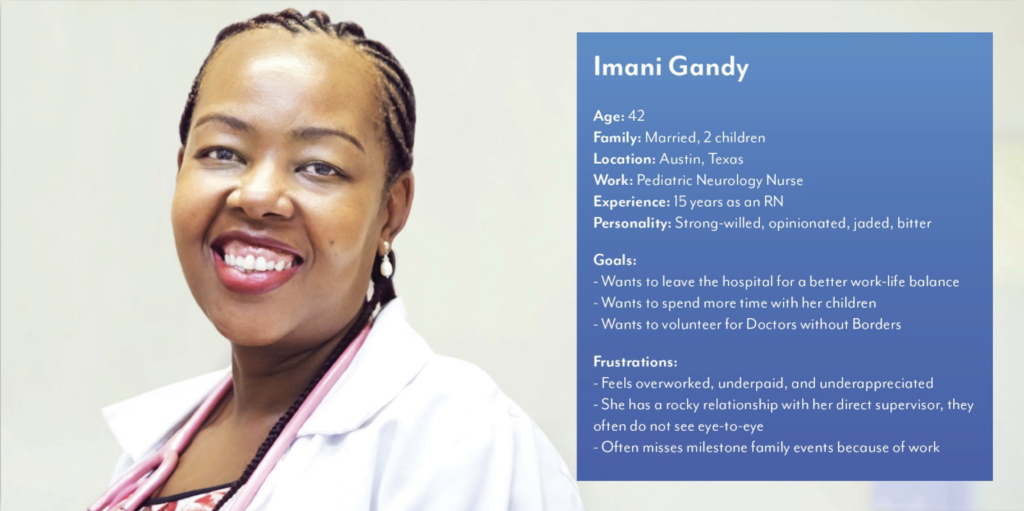
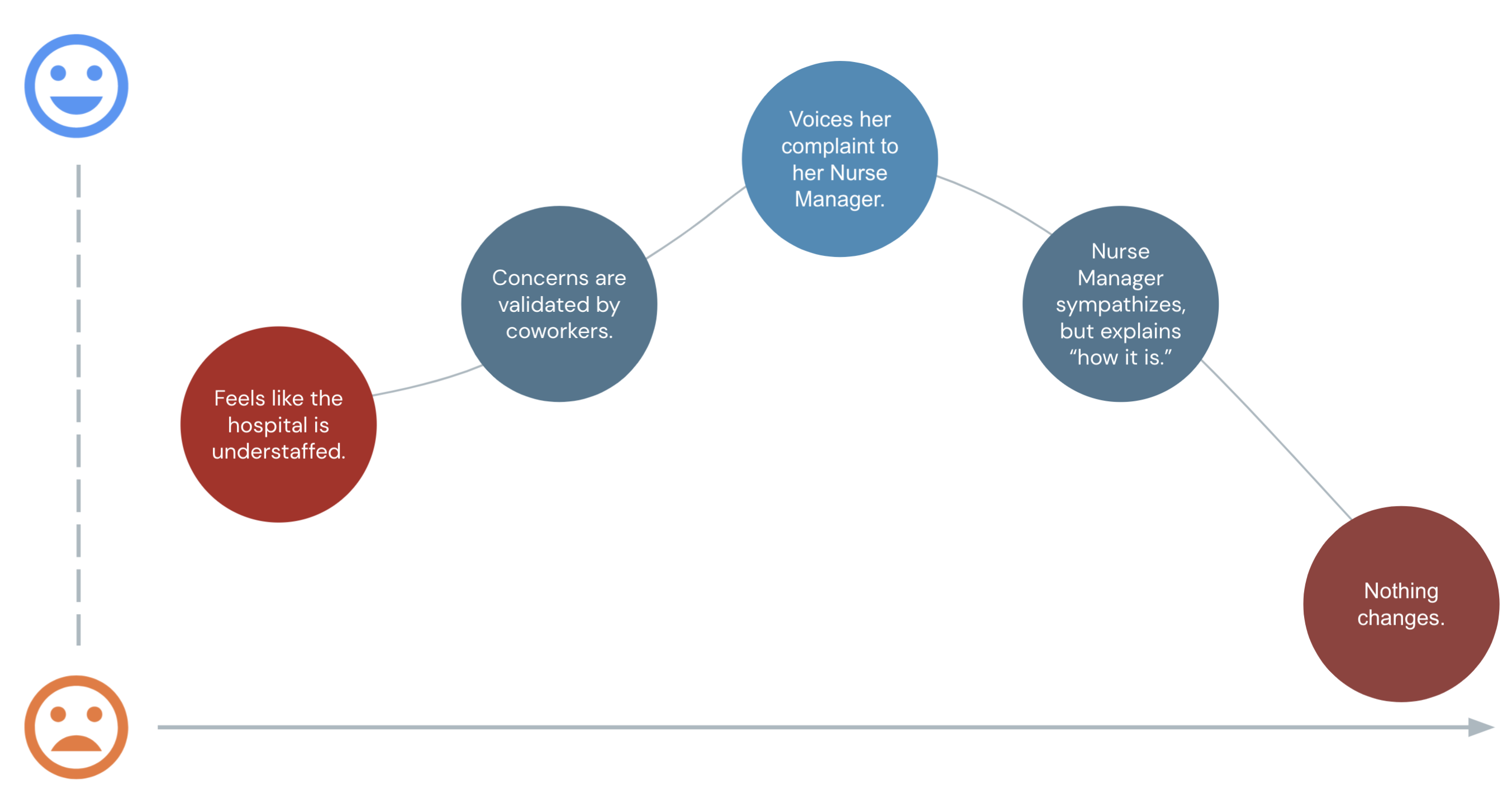
With the data from our recordings and surveys, we also created a user persona, Imani Gandy, and put her through an as-is journey to help us empathize with her struggles, and identify pain points. Our user persona helped us, as designers, empathize, with the nurses and their struggles of feeling unheard and neglected.
Design Process
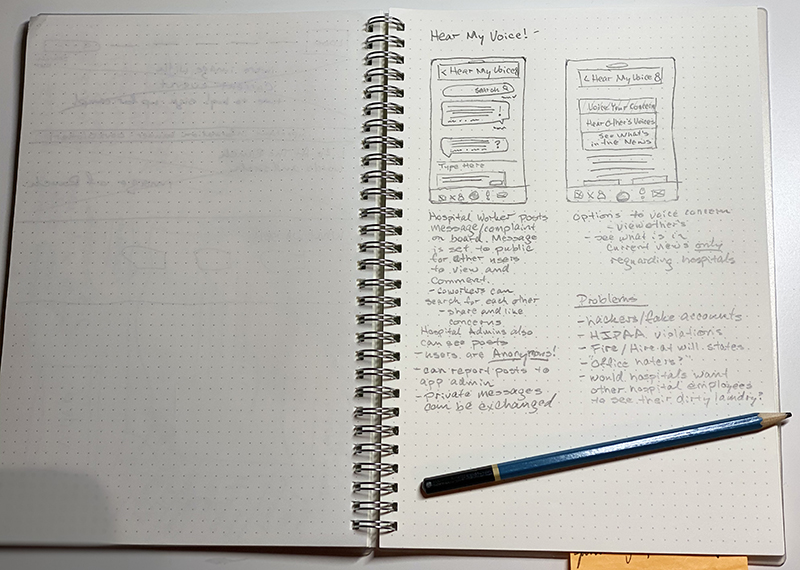
Jazmine, Ali, and I each sketched out three unique ideas. Jazmine’s involved a national nurses’ union, Ali had the idea of a public message board that provided insight into the welfare of nurses in a given hospital, and my idea used a crowdsourcing system to connect healthcare workers and the outside public to solve problems together as a community.
Wireframes
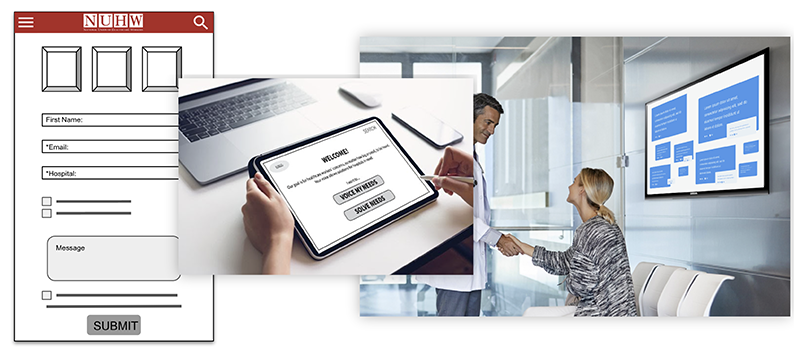
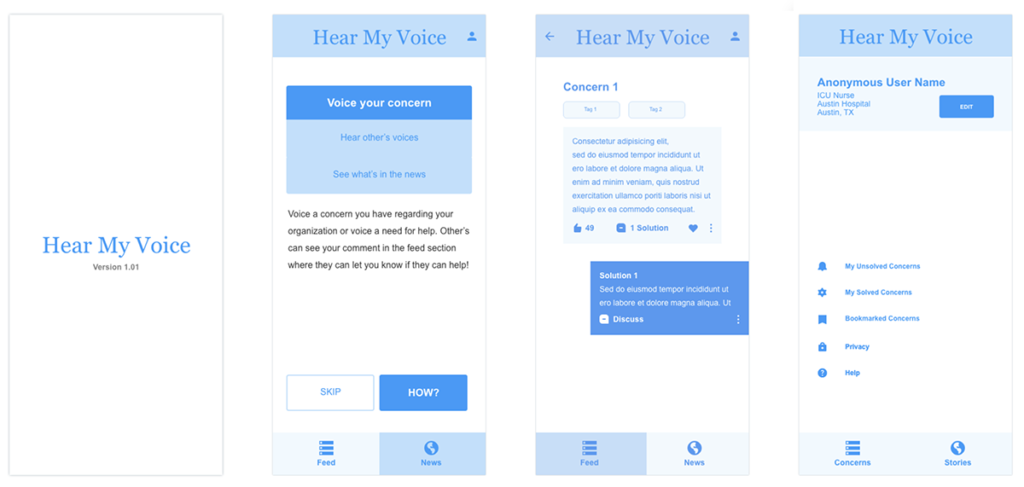
Each of these ideas were very strong on their own, but we needed to decide on one. So we decided to merge them into a singular design. We took the strength of numbers (unions), the public’s willingness to help nurses (crowdsourcing) and the need for transparency and combined them into one design. We started wire-framing the concept and conducted usability testing as much as possible.
User Feedback
With each version, we tested on our nurse volunteers. We had to fix what we did not realize could be viewed as redundant. Many thought “Feed” and “News” were the same items, and were confused by “+” and “New +”. However, they all agreed the blue color was soothing and clean.
Final Prototype
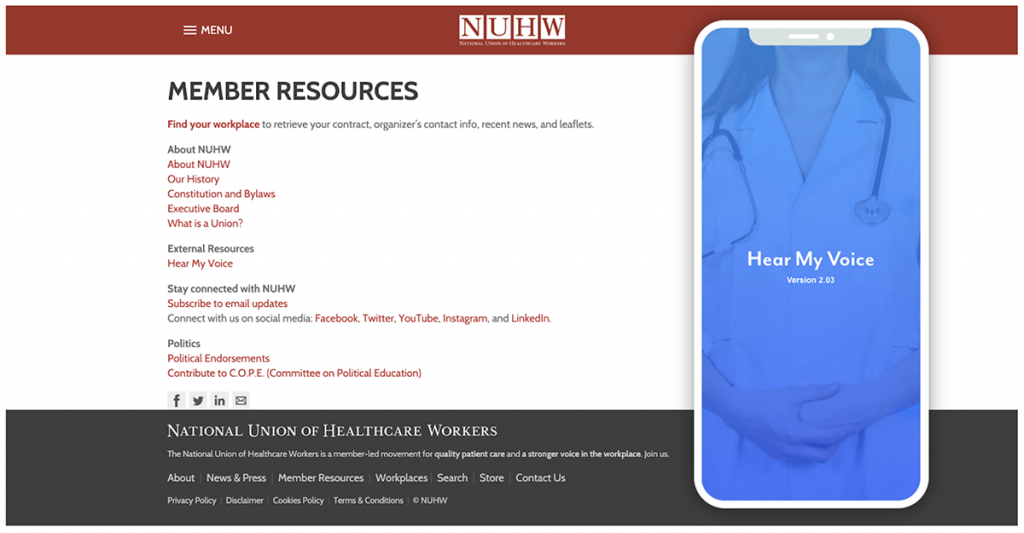
Our final version allows a user to post their concerns and complaints to their own hospital’s private thread. Users can post with their complete contact information, or anonymously if they so chooses. Hear My Voice requires an email associated with a hospital domain and be approved by the application’s administration. Posts are then visible to nurses, union administrators, and hospital management across the nation, each of whom can comment, like, or post a solution. Each post, whether it is the initial concern, or a solution, can be voted on, in a manner similar to Reddit.
Takeaways
Being able to pivot during a project allowed us to create an application we, and our nurse volunteers, were excited about. We learned not to be biased against the data, but to work with it to complete this project. However, we wondered if interviewing later in the pandemic would have supported our original problem statement.
Given more time and research, Hear My Voice would benefit from testing by hospital administration to determine if this application would be a success in the workplace. A complete working prototype would help with this process, rather than a golden path.